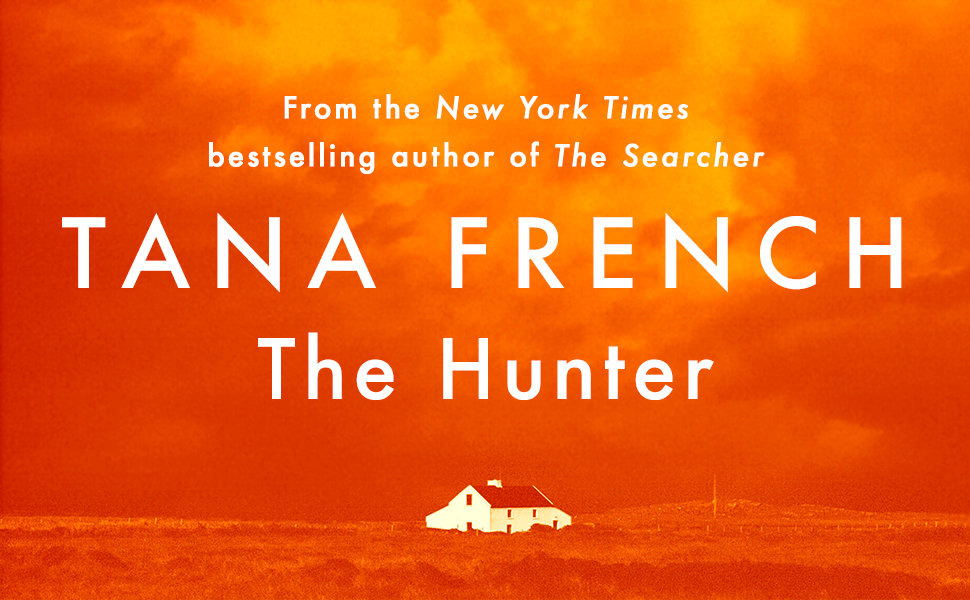
Review: The Hunter by Tana French

Tana French is an author I’m Very Normal about. I recommend her books to anyone who so much as hints they like mystery in my vicinity. I keep one of her books (Witch Elm) on my shelf, unread so I don’t have to face the feeling of running out of Tana French. Like I said, very logical behavior; I am Very Normal. 

So, when I got The Hunter from Net Galley last week I definitely behaved Normally and didn’t, say, scream loudly on the sidewalk when the email came through on my lunch break walk, or bring my e-reader everywhere I went including the bar and my friend’s birthday party. Very. Normal.

Let me start this review with, if you haven’t read anything by Tana French, this shouldn’t be your first one. And if you haven’t read her most recent book, The Searcher, you shouldn’t read this one yet either. It’s a direct sequel, unlike Dublin Murder Squad, and it will spoil The Searcher. If you’re wondering what Dublin Murder Squad is read on, if you’re not, skip to the review.

Beginner’s guide to Tana French:

Tana French is an Irish author with two different series and one standalone novel. If you’re new here the best place to start is Dublin Murder Squad. That’s her first series and also, I would argue, her best. Start with either her first book, In the Woods or The Likeness (some people find In the Woods frustrating is the only reason I offer The Likeness as an alternative, but either will take you on a ride and you can’t really go wrong). After that, you can read around in basically any order. Each novel is about a detective on Dublin Murder Squad, so they are connected. Characters pop up in other character’s books and it’s fun to weave all the cameos together. My personal favorite is Faithful Place, but I do think that one is better if you’ve read The Likeness first. 

Her most recent series, The Searcher, and now, The Hunter, is all about Cal Hooper, an American ex-cop from Chicago who goes to retire in small town in Ireland called Ardnakelty. It’s like an Irish western. A new sheriff blows in to a town that has a law all its own and a kid with a missing brother starts interrupting his peaceful battle with the land and the rooks (like a rough and tough version of Poirot and the vegetable marrows he’s always threatening to grow). You definitely could start with The Searcher if you wanted to, it has no connection to the others. 

The Witch Elm is a standalone. From what people have told me, I wouldn’t start with this one, but I can’t really comment, I haven’t read it. For Normal Reasons, see above. 

Whatever you choose, you’ve got some seriously great writing ahead of you and I am jealous that you get to experience it for the first time.

Yeah, yeah I know all that, tell me about The Hunter already (no spoilers for The Hunter, but since this does take place after The Searcher there might be some mild spoilers for that ahead)

The Hunter has all of the usual marks of a Tana French book. The prose is writers’-envy inducing as always. There are sentences of hers that I think I literally could not come up with in a million-trillion years (actually that’s, like, most of them). There are sentences that feel so intense it’s like they sprang out of the book and actually punched you in the gut. There are other sentences that are laugh out loud funny just when you least expect it. I won’t relay the rest of this joke so you can enjoy it for yourself, but one character calls the whole Ottoman Empire “some boyos” and I died laughing. 

Her characters are, as ever, the star of the show. The events of The Hunter take place a couple years after the end of The Searcher. Cal, Trey and Lena are all in a really good place. Cal did adopt that dog! Trey has one, too! The dogs are friends and Trey is learning carpentry and getting good grades and Cal makes all three of them pizza. It’s adorable!  If you’ve read even one Tana French book, you’ll know that “all the characters you like are doing really well” is a frightening and probably emotionally devastating place to start. 

When I read Searcher, I think I was holding the fact that it isn’t Dublin Murder Squad against it. If I was ranking Tana French books (a challenge!) I would have put it near the bottom. I also don’t love westerns, which didn’t endear me to it. Still a really great book, not a favorite. For The Hunter, I was over that. Within five minutes of reading, I was struck by how much I like these characters. Cal is complex and way more than your cookie-cutter tough guy with a heart of gold. Trey only gets more and more fascinating as she gets older and Lena I just unapologetically like. She lives on her own terms with several dogs. I mean, what’s that if not living the dream? And the town of Ardnakelty is still at once picturesque and brutal. I forget a lot after I’m done with a book, and it took picking up the sequel for me to realize just how real these characters felt and still feel. I could jump right back in without needing to look up a summary of Searcher. 

The delight in this book comes from Tana French’s particular gift for creating characters with their own goals and different lengths they’ll go to achieve them. It’s the cross purposes, the alliances and machinations that make this book fascinating and exciting to the very end. I really was not sure how it would end for most of the book. She has a particular gift for writing teenagers — as we know from Secret Place — and that’s on display here too, with Trey. You understand Trey and at the same time want to scream at her and also give her a big hug and tell her it’s okay to cry (except she’d hit you, probably). 

At about 75% of the way in, I didn’t even really care about the mystery because I was so fascinated by what the characters were doing and how each person’s actions would have consequences for the others. (Don’t worry if you are here for the mystery, Tana French made me care about it again, a lot, very shortly after that). 

This book earns every one of its five stars and at the end of the day I liked it more than I liked The Searcher. So even if that one wasn’t your favorite, I’d say give this one a chance. 

Coasting Through Old Hollywood on Vibes: Siren Queen by Nghi Vo

Siren Queen is both exactly what I expected and also somehow not at all what I expected. Having read The Chosen and Beautiful, I was pretty sure I was in for a fantasy world that operated mostly on very fun, magical vibes without being bothered by explanations. If you’re the sort of person who needs a detailed breakdown of the magic system every time you read a fantasy book this is not for you. If however you’re willing to say things like “okay the dolls are sentient now, sure” and go along your merry way, this will be your jam.
I waited to read this until after I read Evelyn Hugo because I thought they would be thematically similar and I was very right. For anyone whose problem with EH was the writing, this might be more your thing. The writing is beautiful and captivating and hypnotic. It doesn’t always make sense, but you’re willing to go along with it (like a siren song. Ha.). Both this and EH are the stories of women who are outsiders both for their ethnicity and their sexuality trying to make it big in old Hollywood. EH is compelling because of the well-structured plot. Siren Queen is compelling because the plot is, at times, barely there. EH is driven by characters that feel realistic. Siren Queen is driven by lush descriptions of the magic that makes up the old studio system in this world. Both main characters have chaotic friends named Harry (that’s not where the similarities end, but to say more would be a spoiler for both).
I’m giving 4 stars because I really liked it, but this book left me wanting something. I liked drifting along through the story, and old Hollywood but with binding magic is a great idea, but I could have used more solid ground to stand on. I feel like the plot didn’t really heat up until 70% of the way through. This would be best read by the pool or the beach, where you can just kind of coast on the emotions and the magic.

Something Almost Completely Different: The Way Spring Arrives and Other Stories  

E-reader displaying the cover of "The Way Spring Arrives and Other Stories. From a visionary team of female and nonbinary creators." The e-reader is laying on a teal desk mat with pencils next to it.

            As a reader, I have a comfort zone. It’s sci-fi/fantasy, it’s murder mysteries, it’s books about America, or 20th century Hollywood or Victorian England. I haven’t read anything in translation since I finished undergrad years ago. Reading The Way Spring Arrives was like jumping in and out of my comfort zone repeatedly. It’s a genre I’m used to, but from a culture I know pathetically little about. 

There’s some top notch, will-recommend-to-my-short-story-book-club-later, sci-fi and fantasy in here (“The Way Spring Arrives” and “Baby, I Love You” come to mind though there were many others). There were also some stories that were just absolutely wild— stories that walk that very sci-fi line of so imaginative you’re enthralled, but then spend the next several minutes going “wtf did I just read?” (“A Saccharophillic Earthworm,” what the heck happened there? Someone please swap theories with me). Others were simply delightful like “Restaurant at the End of the Universe: Tai-Chi Mashed Taro” which is a spin off of the Douglas Adams book and “What Does the Fox Say” a flash piece about linguistics and Ylvis. 

And then there were a group of stories I would categorize as “I am a dumb American white person with no cultural context for this and need to do some further research.” I haven’t read a story in a while that I just fully did not understand, and this anthology had a few. That’s on me, though, not the book. The book tried to help me understand wherever possible. 

There were a bunch of really good essays about translation that helped me understand not only the challenges the translators were facing, but also some of the broader context of Chinese sci-fi. Rebecca F. Kuang (author of The Poppy War) has an excellent essay about it as does Yilin Wang. Yilin Wang’s is particularly interesting as it is an essay about translating two stories that appear in the book after the essay. So, unlike some of the others, you know the translator’s thoughts and have some context going into the two short stories. 

I also found Jing Tsu’s “The Futures of Genders in Chinese Science Fiction” really engaging. It told me a lot about women in Chinese literature historically and about how China first encountered the sci-fi genre (as we know it) as an import in the era of Jules Verne. It’s one of those essays that helps you understand while showing you just how much there is you don’t know. 

Each story and essay is entirely its own thing. There are all types of subgenres, tones, subjects, and styles. If you can pick this up and find nothing you like, I’d be shocked. I learned a ton reading this and enjoyed some quality short stories that I hope I can nominate for awards next year. 

Who this is for: Anyone who likes sci-fi and/or short fiction. Also, anyone who has ever thought about translating something and went “wow, that seems hard, I can’t believe people can do that.” 

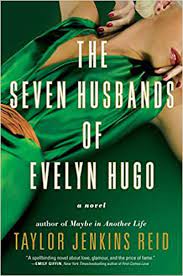
Late to the Party: The Seven Husbands of Evelyn Hugo

Cover of The Seven Husbands of Evelyn Hugo by Taylor Jenkins Reid.

If you make it through this book and don’t feel things—I’m not going to say you’re a monster because that’s rude and I am probably more likely to cry over a book than most—but if you could keep your feelings in check for the entirety of this book, just know I am in awe and I fear you.
I spent the last 150 pages of this book in sporadic tears. It had a vice grip on my tear glands and would not let go. Every time I thought I had regained control, lol no I didn’t. I regret nothing, it was such a good book.
The Bi representation in particular was very good. The way Evelyn kind of stumbles into her identity as an adult after realizing that she wants Celia felt very real to me. Also the way she insists on using the label she has put on herself and rejecting the other boxes people try to put her in. I also am a sucker for old Hollywood stories so this was really just everything I could have wanted.
It also reminded me of my love of the word “sexpot.” Every time I see it I just picture two men coming up with that word like:
“How would you describe her, Jim?”
“Well, she’s like sex, if sex could be put in some sort of container. Like honey in a pot. She’s a honeypot, but for sex. A sexpot, if you will.”
“What an exceedingly normal thing to say, Jim. Let’s print it.”

Does it have flaws? Yes, of course it does. Reading this was similar to how I felt reading Where’d You Go Bernadette: There were moments where I thought, “oh that’s a little ham fisted” or “that could definitely be written better,” but I really didn’t care. This book is a plot machine and you need to know what happens so bad you can forgive some minor writing sins. Also TJR makes up for any bit of clunky writing with whole pages so good I read them twice. You also definitely guess plot points WAAAY ahead of Monique, the reporter telling Evelyn’s story. There’s one reveal in particular that was so blatantly obvious I forgot Monique hadn’t figured it out yet and so when she did I found myself shouting at the book “really? it took you this long?” And I found Monique to be a really likable, smart character so I was unwilling to believe that she didn’t catch on sooner.
There’s one other point that will bother literally no one but me. I could not believe that Evelyn went to Paris because of Breathless, a movie that commits the deeply French sin of asking “what if noir was boring.” This is not a flaw in the book, I just wanted to dunk on Breathless…and the French.
But in general yes, as ever, I was late to the party on this one and turns out y’all were right. It’s a great party.

The Delicious and Dangerous World of “Velvet was the Night”

Noir is one of my favorite genres by far so when I saw Silvia Moreno-Garcia had written one (I throughly enjoyed Mexican Gothic), I got it the week it came out back in August. Of course, that means that I am just now getting around to reading it in January.

Noir is a genre with an extremely set and recognizable set of tropes. I find this sometimes makes really original noir hard to come by. But the very best contemporary noir figures out how to re-shape the classic elements of noir—the femme fatale, the mean streets, the hard-boiled detective—into something recognizable but distinctly different.

Where Velvet Was the Night really separates itself from the pack is the setting. Moreno-Garcia drops us in Mexico in the 1970s. The government sees communist sympathies as a threat to be squashed, and have hired a group of thugs called the Hawks to do the squashing. The Hawks were specifically sent after leftist students and took care to also quiet any journalists that got wind of the violence. They’d also go after journalists, smash their cameras, and destroy all the evidence. The very first page of this book is an actual telegram sent by the U.S. Department of State in 1971 acknowledging the existence of the Hawks. “It is well established,” the telegram says, “that the Hawks are an officially financed, organized, trained and armed repressive group.”

I never learned much about Mexico’s history. It was somehow not really covered by my high school “Modern World History” class (Europe, I of course learned about at length). I never realized Mexico’s government also took a strong and violent stand against leftists and this book inspired me to learn a little more about that history.

It truly is a great place for noir. You have a violent, government backed, and powerful group of gangsters that has a city full of students in a chokehold. At the same time, members of the Hawks are starting to realize that they’re on the way out; They might not always have the government’s favor. That makes for interesting internal dynamics as well. We get to see this play out through Elvis, a Hawk who really likes that old time rock ‘n’ roll and doesn’t really enjoy murder. Not enough to—you know—not kill people, but hey. By Hawk standards, he’s practically a teddy bear.

And at the center of it all we have a quintessential noir protagonist, Maite. Maite is bored and unhappy. Her job is going nowhere, her sister overshadows her (even on Maite’s own birthday), her love life has stalled out, her car literally stalled out, and money is tight. (Content warning: Maite also has a lot of disparaging thoughts about her body as well, heads up). She escapes all of this by reading soap opera-y comics full of romance and danger. She’s desperate for money for her car, there’s not much in her normal life that appeals to her, and she has a habit of stealing things because she can (unclear if this is just full blown, “fuck it” recklessness or kleptomania). In short, she’s a character made for trouble. And this is a noir so trouble, of course, finds her.

The other place where I think Velvet was the Night stands apart from a typical noir is the MacGuffin. Normally, I don’t really care about the MacGuffin. Obviously, I mean, this is why the term MacGuffin was created. It doesn’t matter what it is, it just matters that the characters want it. In this case the MacGuffin is film containing pictures of the Hawks bloodying up students. It’s the only surviving shred of evidence from a deadly attack. I found myself desperately wanting the film to fall into the hands of someone who could publish it and show the public exactly what the government was doing. Those stakes made it easy to get invested in the drama surrounding Maite, even when Maite herself just wants to get her catsitting money from her neighbor and have no more to do with the whole thing.

Some noir stories are intense mysteries with twists and turns (the Maltese Falcon kind) while others are like watching a train wreck happen in slow motion, knowing there’s going to be a crash (The Double Indemnity kind). I argue this is the latter. There is some mystery, but if you read mysteries regularly you will almost certainly be able to guess the end—and that’s okay. Trying to trick you doesn’t seem like the goal here; it’s all about watching this evil the Mexican government unleashed ripple through the lives of not just the intended targets, but the people around the targets who get sucked into danger like water down a drain. (Look, I had to do one corny noir metaphor. Just be glad I restrained myself until now).

Just like with Mexican Gothic, this is Silvia Moreno-Garcia showing off her mastery of genre fiction. There’s prose you don’t want to miss a word of, and a truly delightful playlist in the back. (There’s some Spanish rock ‘n’ roll on there I really like and would never have found without this book).


This book is for you if you like black and white movies—the more Bogart the better. If books with Spotify playlists in the back give you joy. If thinking about HUAC makes your blood boil. Or if sometimes you sneak a little Elvis into your shuffle.

Pairs well with: Sitting by the AC in the dog days of summer, an old fashioned with extra ice, and killing time while waiting for your car to get repaired.

What the flock is this?

Welcome! There’s more pop culture than penguins here, but sometimes there isn’t even that. What is here? Often there will be even tempered, thoughtful, almost academic, reviews. Other times there will be rants, wild speculation, and possibly even unbridled swearing (sorry, Dad). Other, other times there will be hundreds of words dedicated to a subject so niche you may be prompted to ask “who on earth cares?” The answer, unfortunately, is me.

Let’s dive in, shall we?