
Hard-Boiled Snow Day

Note: Every so often this page will contain amusing nonsense. This is some of that nonsense.
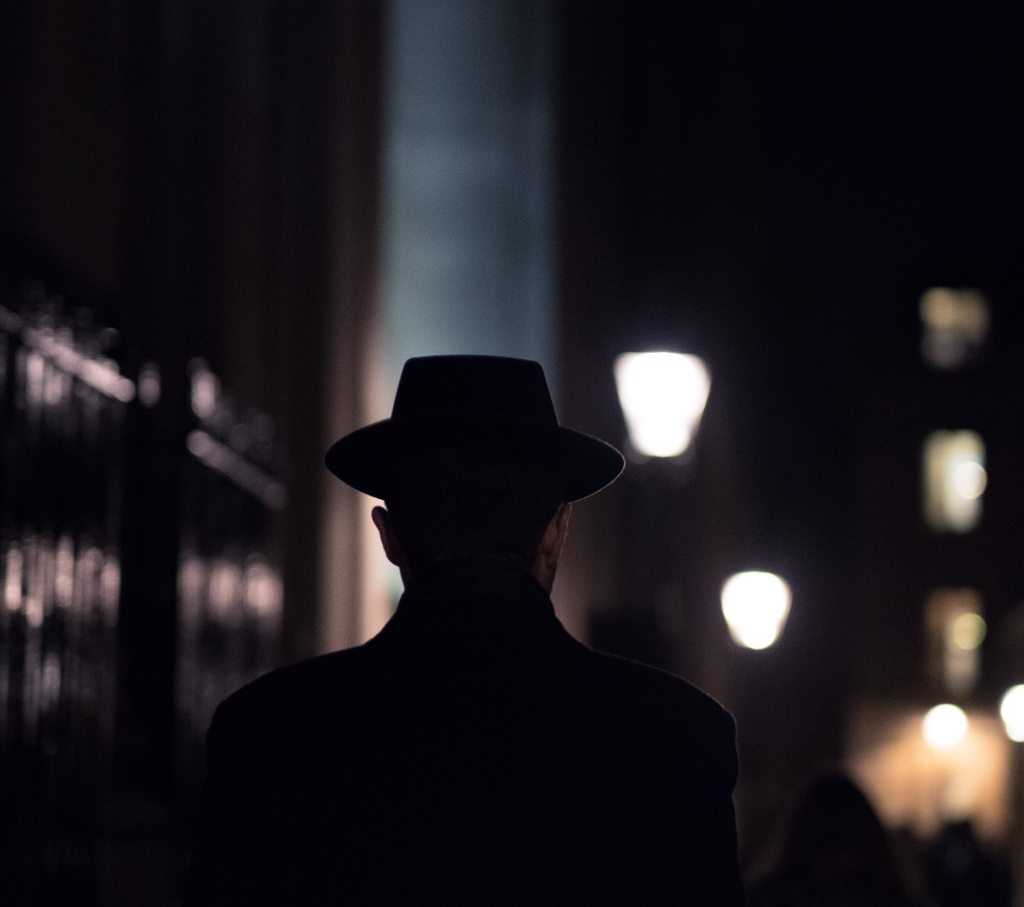
Just when I thought these streets couldn’t get any colder, the storm blew in.

I was looking down at an alley from my 15th floor walkup, watching it fall. It was whiter than a glass of skim milk in the arctic out there and the buildings were getting harder and harder to make out. This could only mean one thing: I was stuck at home with only a bottle of rye and my old wounds for company. 

A guy could sure use a cup of cocoa in times like these. I walked over to my kitchen—it was just a hot plate, a microwave and a few assorted cockroaches in a nook, but for a guy like me it was a five-star restaurant. Though today, I did wish there was a barkeep to take my order: one cocoa, extra chocolatey, absolutely no marshmallows. I wasn’t about to get soft.  

As usual, I had to do it alone. I heated some water in the microwave. I tried a sip. It burnt my tongue, so I punched the microwave’s lights out. What was it trying to do, huh? 

I dug around in my cabinet until I found it: an old packet of Swiss Miss. I’d had a Swiss miss once. I buried this packet deep in my pantry when she left me for a white-collar criminal who could give her the kind of life she deserved. It still stung sometimes, but not as much as the bullet she shot me with on her way out.

I sifted through the hot chocolate packet. I’d caught wind of something called a “hot cocoa bomb” recently and I needed to make damn sure no one had put one in here. It was clear: nothing doing but chocolate and sugar. I dumped it into the water. 

I was having trouble getting the cocoa to mix in. It was all sticking together in little clumps on the surface. I didn’t mix well with others either, so I couldn’t blame it. That’s how I wound up alone on a snow day. No partner, no dames, not even a criminal to keep me occupied. 

That’s when it came to me. I could make my own company. I threw back the cocoa in one gulp like it was cheap tequila and headed outside. 

Out in the alley, I stared at the fresh snow on the ground. I wasn’t sure where to start, but I’d seen little kids do this in the movies so I figured it couldn’t be that hard. I gathered a bunch of snow in both arms and squished it together. It was colder than a dame’s heart, but I didn’t let that get to me. I squished together a smaller ball and then an even smaller ball and finally found some little sticks for arms. There he was. My new partner.  My snowman looked a little naked out there in the blizzard, so I gave him my fedora to keep him warm. The kid looked sharp. 

No sooner had I done that, then an unknown assailant pelted me with a snow-based projectile. It sent a cold trickle of icy water down my collar that I wouldn’t soon forget. He was at the end of the alley; short guy, couldn’t have been more than 12. He’d just picked a fight with the wrong man. 

I pulled a .22 from my pocket and was about to take aim when a stick gently pressed my gun arm down. It was my snowman. 

“Put it away,” my new partner said. “We need to beat him at his own game.” 

I was about to say something smart about not taking orders from anyone, snowmen included, when another snowball hit me square in my even squarer jaw.

I put the gun away, grabbed a handful of snow, and started throwing. The snowman did too, but he was quicker than I was. He knocked the boy down with a well-aimed snowball to the face. 

I wished that had been the end of it, but no, turns out the perp wasn’t alone. He had a whole gang behind him. Snowballs started whizzing past me from all directions. I couldn’t keep up. We were outnumbered.  

“Save yourself!” the snowman shouted as one ball of ice hit one of his stick arms and sent it flying down the alley. 

“I can’t leave a man behind!” I said. 

“But you can leave a snowman behind,” he said, insistent. Two snowballs hit me in the kneecaps, and I knew I wasn’t going to be able to take this much longer. He was right. 

 “I’ll cover you,” he said. I dashed toward my building but turned back halfway. 

“I think we really had something here,” I said. “It was the start of a beautiful friendship!”

“We’ll always have 5 minutes ago!” he replied. The assailants redoubled their attack. A wave of snowballs came crashing down on our end of the alley. I made it inside and back up to my apartment. When I looked down at the alley from my window all that was left was my hat, half-buried in snow.  

The Delicious and Dangerous World of “Velvet was the Night”

Noir is one of my favorite genres by far so when I saw Silvia Moreno-Garcia had written one (I throughly enjoyed Mexican Gothic), I got it the week it came out back in August. Of course, that means that I am just now getting around to reading it in January.

Noir is a genre with an extremely set and recognizable set of tropes. I find this sometimes makes really original noir hard to come by. But the very best contemporary noir figures out how to re-shape the classic elements of noir—the femme fatale, the mean streets, the hard-boiled detective—into something recognizable but distinctly different.

Where Velvet Was the Night really separates itself from the pack is the setting. Moreno-Garcia drops us in Mexico in the 1970s. The government sees communist sympathies as a threat to be squashed, and have hired a group of thugs called the Hawks to do the squashing. The Hawks were specifically sent after leftist students and took care to also quiet any journalists that got wind of the violence. They’d also go after journalists, smash their cameras, and destroy all the evidence. The very first page of this book is an actual telegram sent by the U.S. Department of State in 1971 acknowledging the existence of the Hawks. “It is well established,” the telegram says, “that the Hawks are an officially financed, organized, trained and armed repressive group.”

I never learned much about Mexico’s history. It was somehow not really covered by my high school “Modern World History” class (Europe, I of course learned about at length). I never realized Mexico’s government also took a strong and violent stand against leftists and this book inspired me to learn a little more about that history.

It truly is a great place for noir. You have a violent, government backed, and powerful group of gangsters that has a city full of students in a chokehold. At the same time, members of the Hawks are starting to realize that they’re on the way out; They might not always have the government’s favor. That makes for interesting internal dynamics as well. We get to see this play out through Elvis, a Hawk who really likes that old time rock ‘n’ roll and doesn’t really enjoy murder. Not enough to—you know—not kill people, but hey. By Hawk standards, he’s practically a teddy bear.

And at the center of it all we have a quintessential noir protagonist, Maite. Maite is bored and unhappy. Her job is going nowhere, her sister overshadows her (even on Maite’s own birthday), her love life has stalled out, her car literally stalled out, and money is tight. (Content warning: Maite also has a lot of disparaging thoughts about her body as well, heads up). She escapes all of this by reading soap opera-y comics full of romance and danger. She’s desperate for money for her car, there’s not much in her normal life that appeals to her, and she has a habit of stealing things because she can (unclear if this is just full blown, “fuck it” recklessness or kleptomania). In short, she’s a character made for trouble. And this is a noir so trouble, of course, finds her.

The other place where I think Velvet was the Night stands apart from a typical noir is the MacGuffin. Normally, I don’t really care about the MacGuffin. Obviously, I mean, this is why the term MacGuffin was created. It doesn’t matter what it is, it just matters that the characters want it. In this case the MacGuffin is film containing pictures of the Hawks bloodying up students. It’s the only surviving shred of evidence from a deadly attack. I found myself desperately wanting the film to fall into the hands of someone who could publish it and show the public exactly what the government was doing. Those stakes made it easy to get invested in the drama surrounding Maite, even when Maite herself just wants to get her catsitting money from her neighbor and have no more to do with the whole thing.

Some noir stories are intense mysteries with twists and turns (the Maltese Falcon kind) while others are like watching a train wreck happen in slow motion, knowing there’s going to be a crash (The Double Indemnity kind). I argue this is the latter. There is some mystery, but if you read mysteries regularly you will almost certainly be able to guess the end—and that’s okay. Trying to trick you doesn’t seem like the goal here; it’s all about watching this evil the Mexican government unleashed ripple through the lives of not just the intended targets, but the people around the targets who get sucked into danger like water down a drain. (Look, I had to do one corny noir metaphor. Just be glad I restrained myself until now).

Just like with Mexican Gothic, this is Silvia Moreno-Garcia showing off her mastery of genre fiction. There’s prose you don’t want to miss a word of, and a truly delightful playlist in the back. (There’s some Spanish rock ‘n’ roll on there I really like and would never have found without this book).


This book is for you if you like black and white movies—the more Bogart the better. If books with Spotify playlists in the back give you joy. If thinking about HUAC makes your blood boil. Or if sometimes you sneak a little Elvis into your shuffle.

Pairs well with: Sitting by the AC in the dog days of summer, an old fashioned with extra ice, and killing time while waiting for your car to get repaired.